
Inside Enterprise Sales
Business Value Assessment Template: What Buyers Should Include
A practical business value assessment template to help software buyers evaluate ROI, costs, assumptions, risks and success metrics.
Inside Enterprise Sales
A practical business value assessment template to help software buyers evaluate ROI, costs, assumptions, risks and success metrics.
Buying software is rarely just a technology decision. For most organisations, a new software purchase needs to compete against other priorities: * Hiring * Cost reduction * Operational projects * Security initiatives * Customer experience improvements * AI investments Even when stakeholders agree that a solution is useful, the project may still fail to secure budget.
At some point during a software evaluation, a vendor will present a business case. The presentation often includes: * Cost savings * Productivity improvements * Revenue growth * Risk reduction * Return on investment (ROI) The numbers can look impressive. A projected 300% ROI. Payback in 12 months. Millions of dollars in future benefits. The
Selecting enterprise software has never been easier. Or more difficult. Buyers have access to more vendors, more product information and more demonstrations than ever before. At the same time, the number of stakeholders, technologies and evaluation criteria continues to grow. The challenge is no longer finding software. The challenge is
Buying enterprise software used to be relatively simple. A department identified a need, evaluated a few vendors and made a decision. Today, software buying is rarely that straightforward. Modern software purchases often involve: * CIOs * CTOs * CFOs * Procurement teams * Security teams * Legal departments * Business leaders * End users As software becomes more
At some point during a software evaluation, many buyers encounter a familiar presentation. The vendor produces a business case. A spreadsheet appears. A consultant walks through projected savings, productivity gains, revenue improvements or cost reductions. The conclusion often sounds compelling: "This investment will generate a 5x return within three
Most buyers assume that software sales is about product demonstrations, pricing discussions and contract negotiations. In reality, many enterprise software vendors begin planning long before a proposal is ever submitted. Behind the scenes, sales teams often create detailed account plans designed to help them understand the organisation, identify stakeholders, navigate
Independent insights helping executives evaluate software vendors, challenge ROI claims and make smarter technology buying decisions.
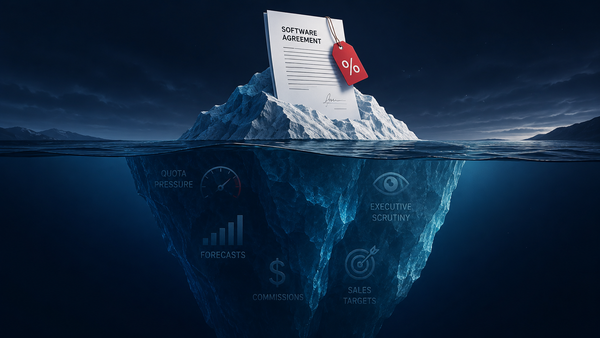
One of the most common pieces of software buying advice is: "Wait until the end of the quarter and you'll get a better deal." Like most advice, there's some truth to it. But it's also incomplete. Many buyers assume quarter-end discounts
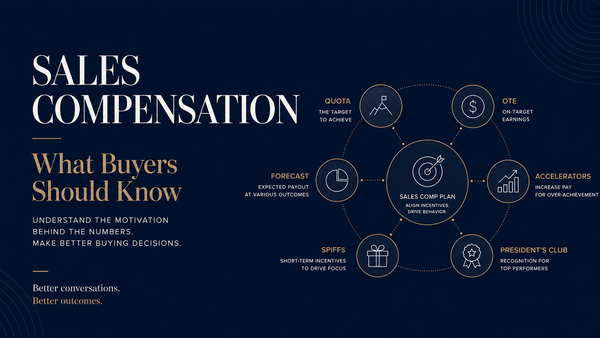
Most buyers understand that software salespeople earn commission. Far fewer understand how compensation plans actually work, and how those plans influence behaviour throughout the buying process. If you've ever wondered why a salesperson suddenly becomes more responsive near quarter-end, why executives appear unexpectedly during negotiations, or why
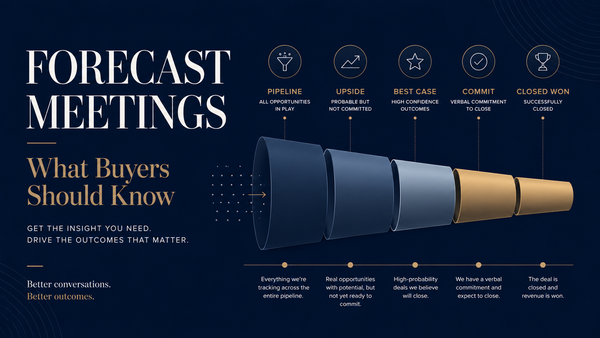
Most buyers never see what happens after a sales call ends. Once the meeting is over and the vendor logs off, the opportunity often enters a completely different process: the forecast. Inside most SaaS and enterprise software companies, salespeople attend regular forecast meetings where they explain which deals are likely
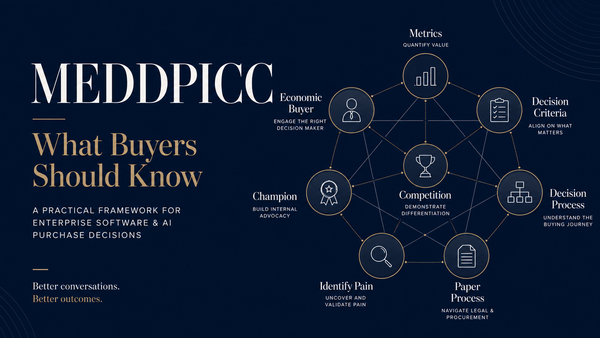
Most executives have never heard of MEDDPICC. Many software sales teams, however, think about it every day. If you've ever wondered why software vendors keep asking about stakeholders, budgets, timelines, business outcomes and procurement processes, there's a good chance MEDDPICC is influencing the conversation. MEDDPICC is
Most executives assume discovery calls are designed to help vendors understand requirements. That's partly true. But if you've ever wondered why software vendors ask so many questions before showing a demo or sharing pricing, there's a good reason. Behind every discovery call is an